
Wired Client
Native macOS client for chats, private messages, boards, files, synchronization and integrated administration.
macOS
Native app
Wired 3 mainly includes a server for macOS and Linux, and a native macOS client. The current scope covers chats, private messages, boards, files sharing and administration.

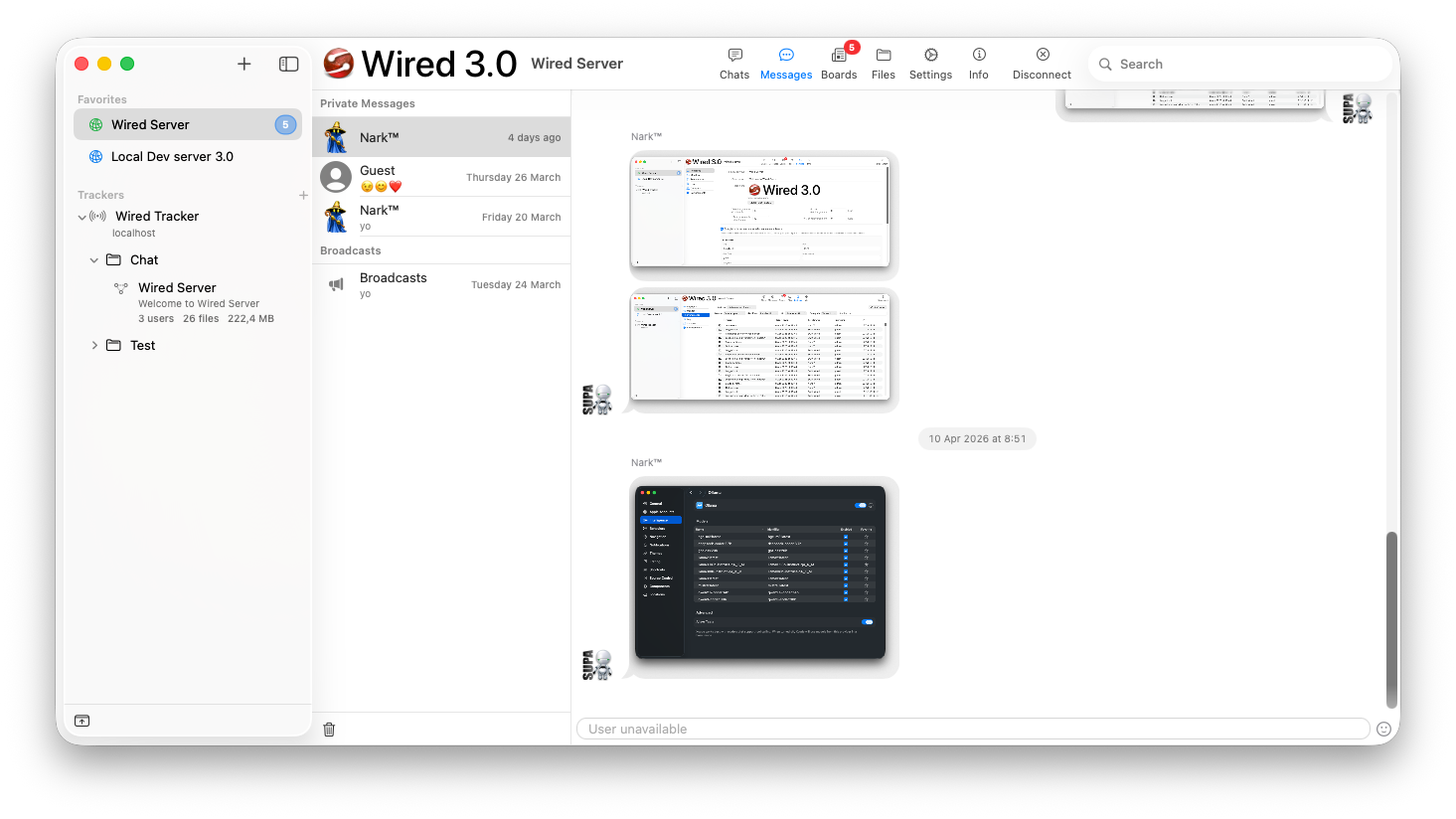
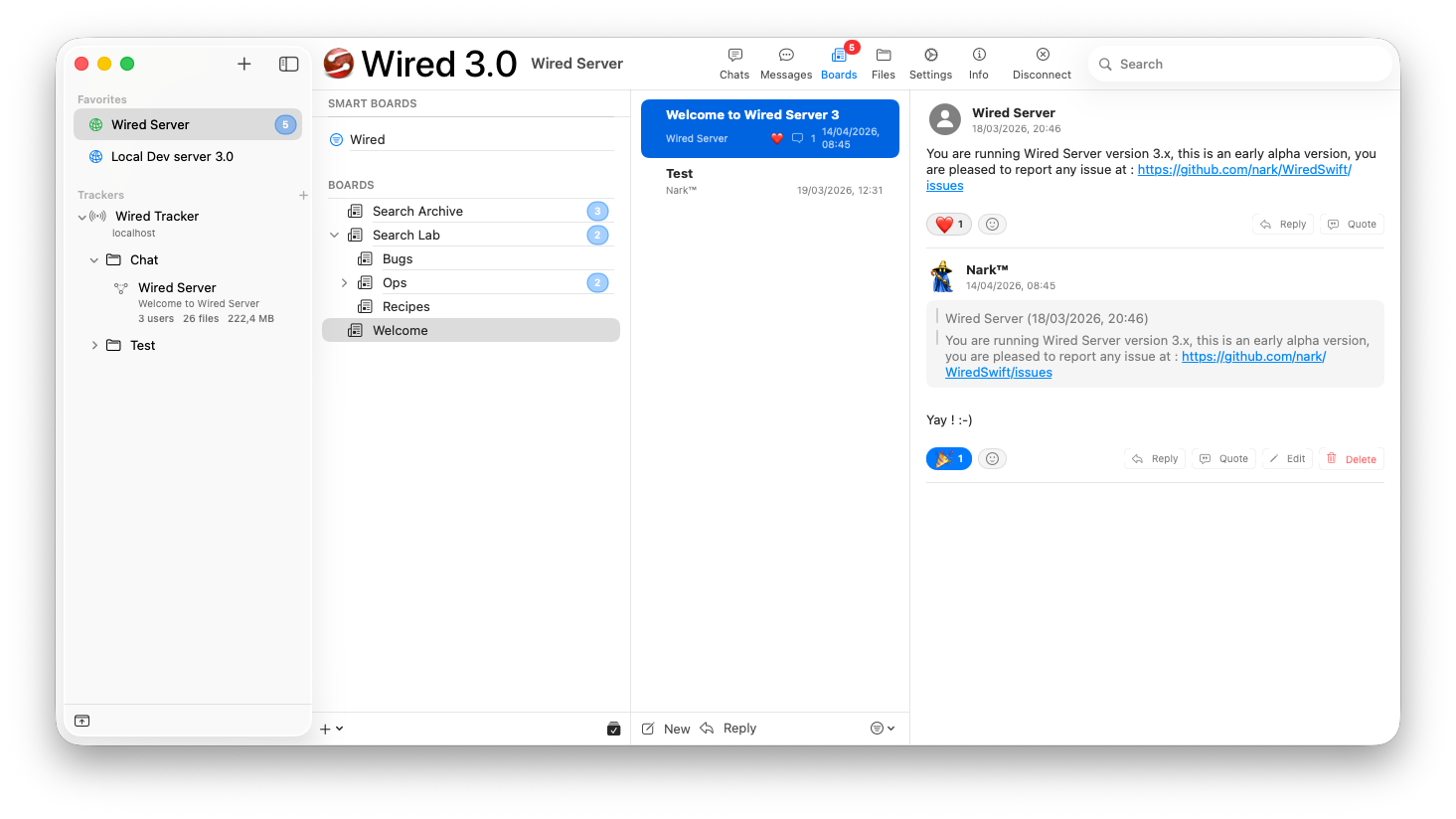
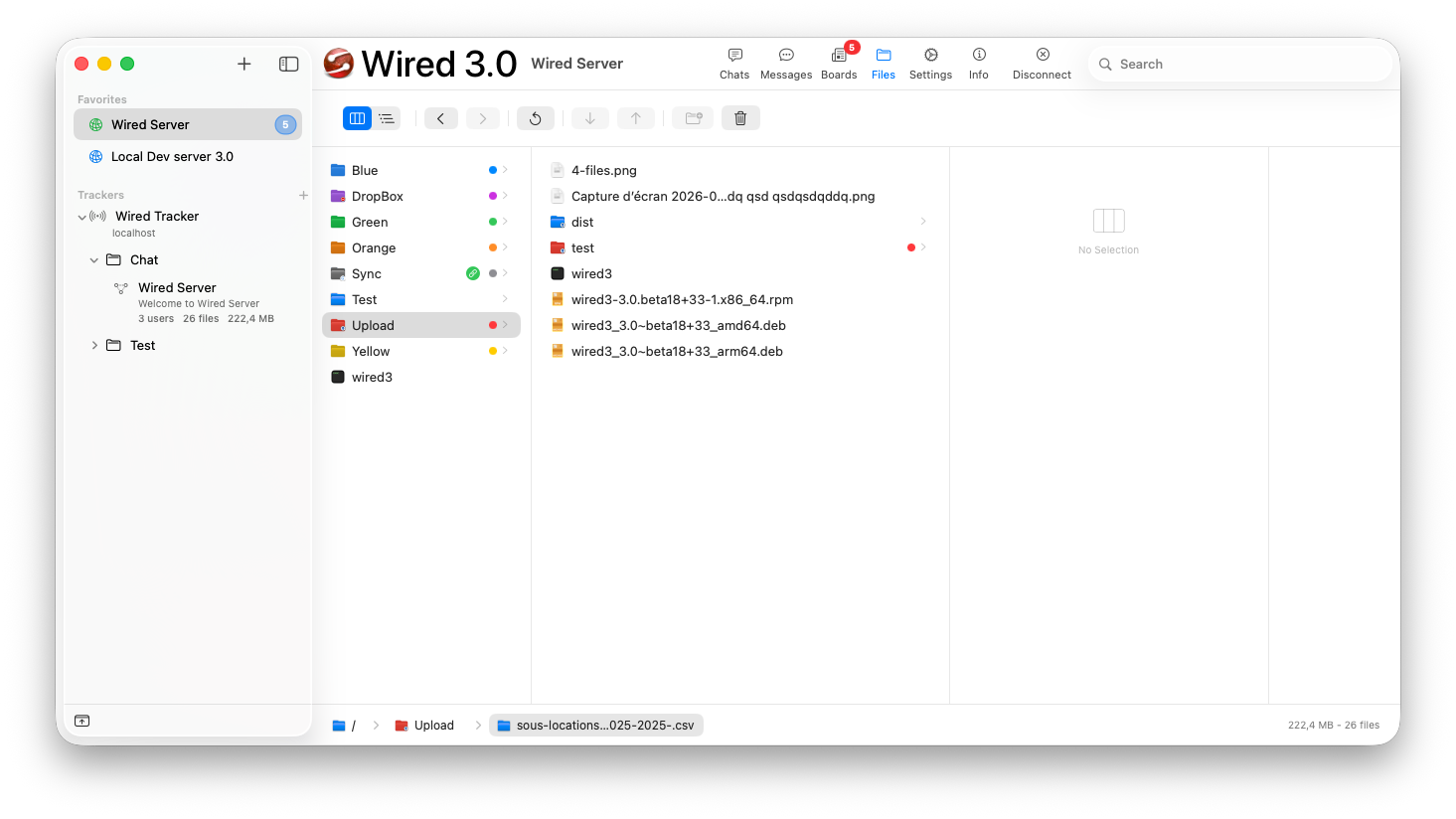
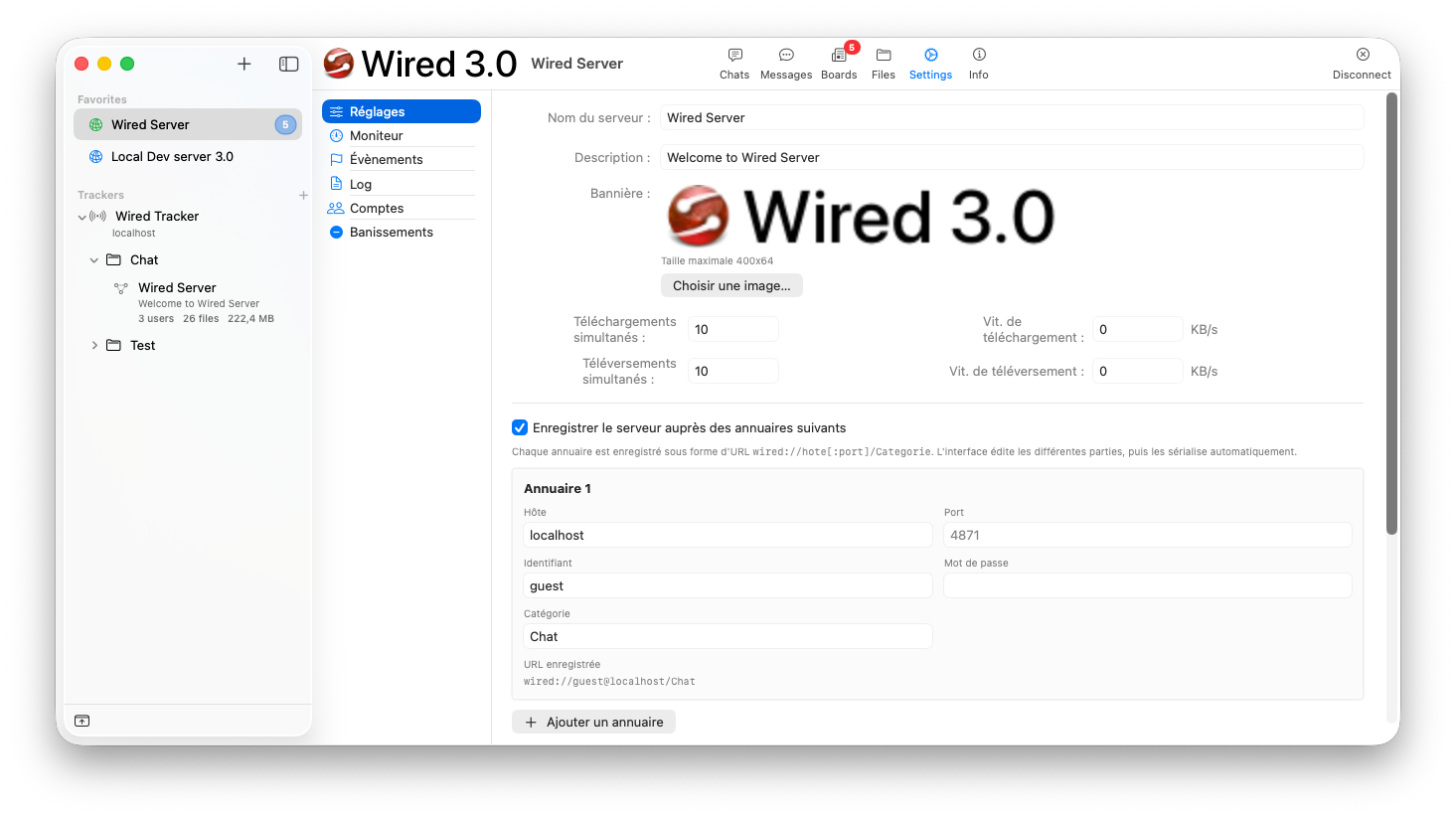
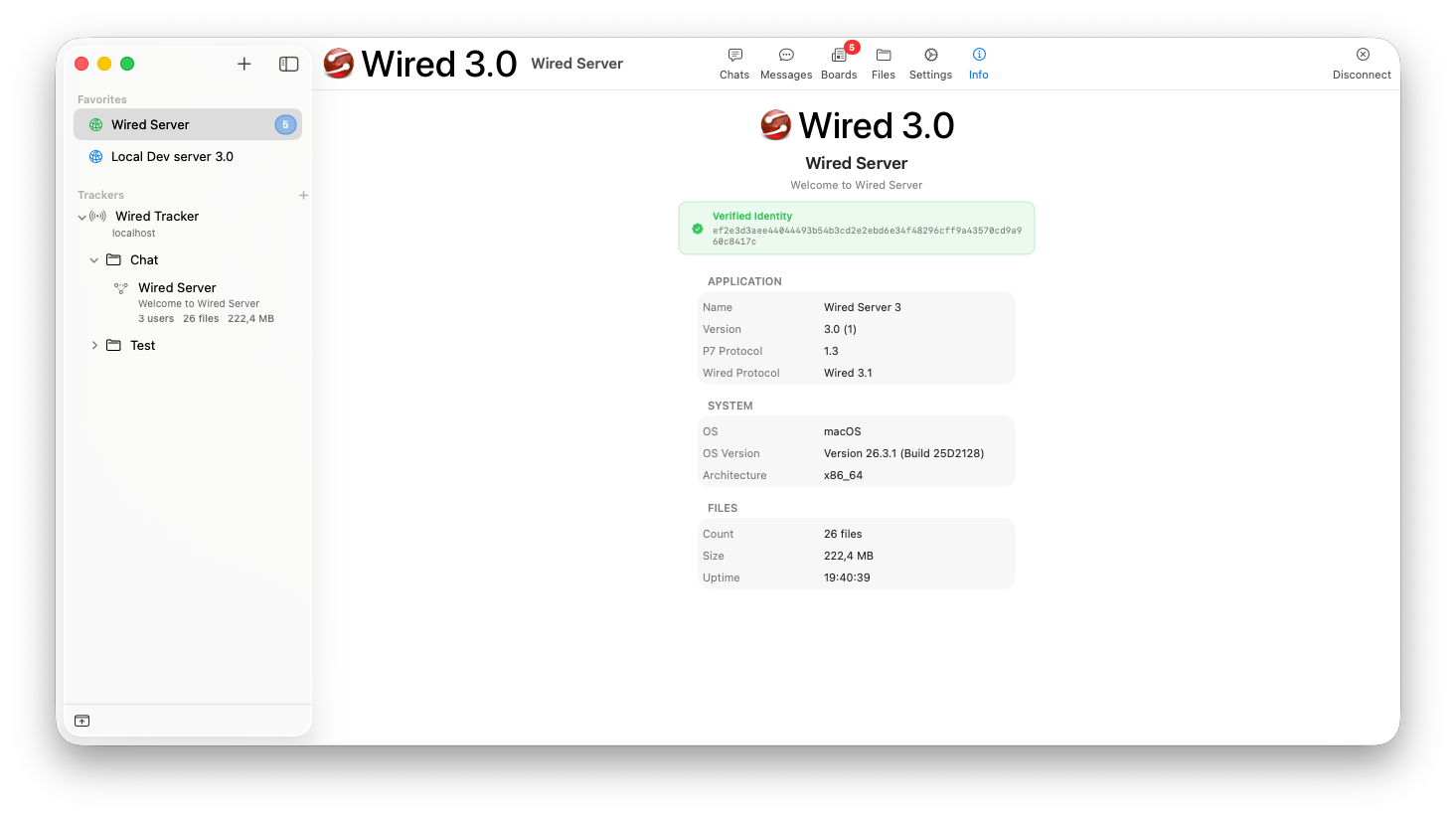
Native macOS client for chats, private messages, boards, files, synchronization and integrated administration.

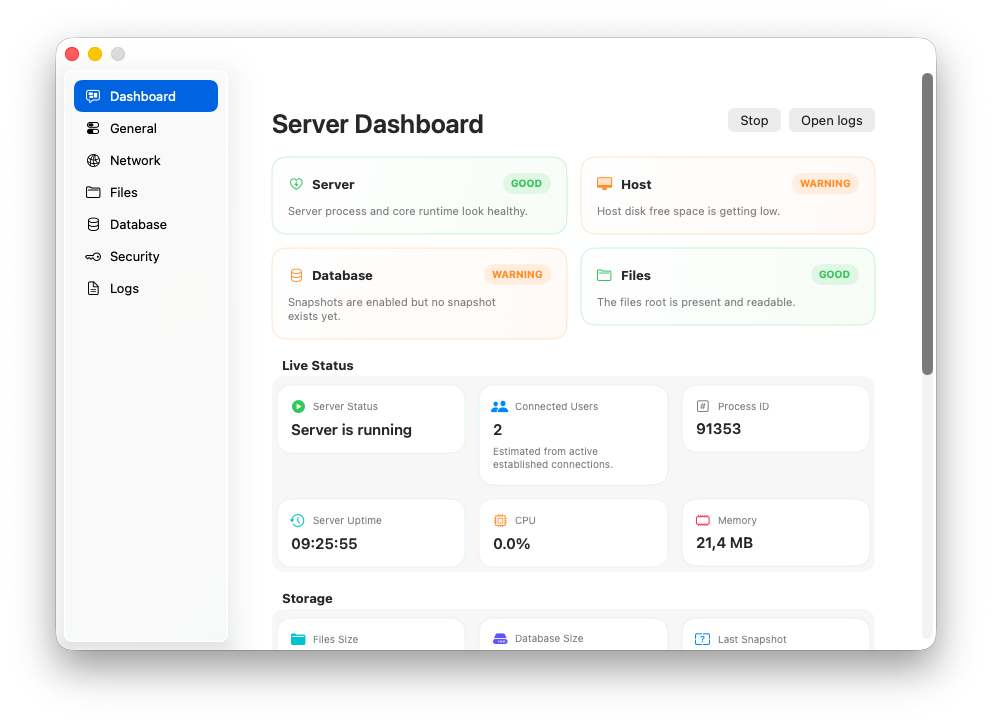
Server component available as a native macOS app and as Linux distributions through archive, package and container workflows.

Bot component for automation, moderation and LLM-backed routines, available for macOS and Linux.
Native iOS client for chats, private messages and boards at your fingertips.
Full featured
With chats, private messaging, discussion boards and file sharing, Wired provides a complete set of tools to run your own BBS.
macOS first
The client is a native modern macOS application written in Swift. The server also has a native macOS app for local administration.
UNIX-based
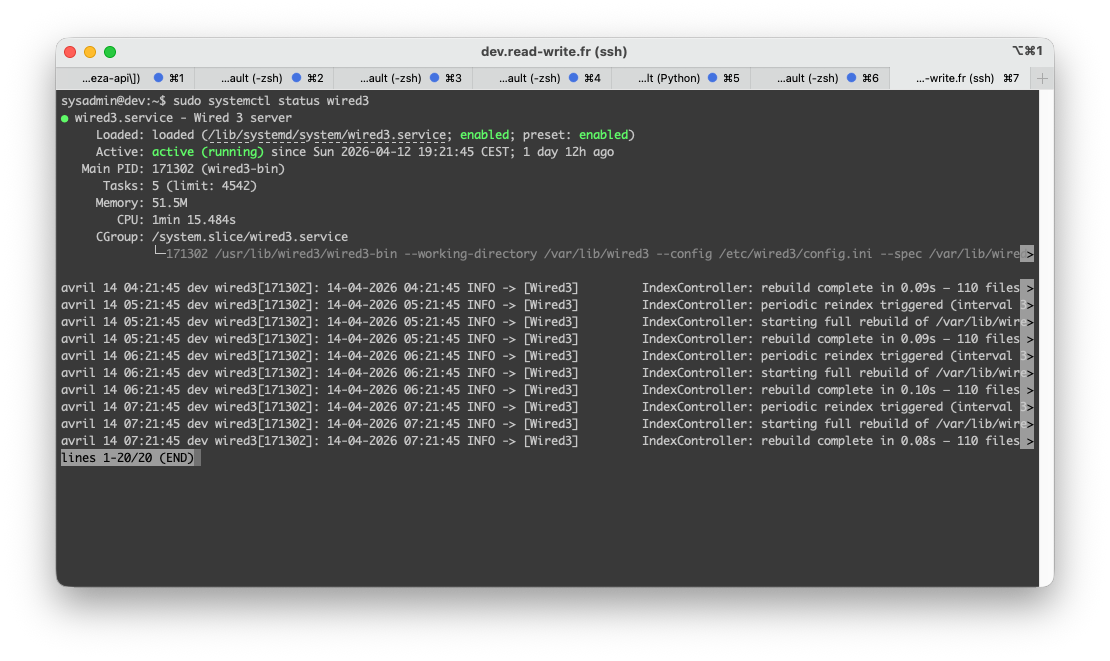
It is built to run cleanly on UNIX-like systems such as Linux and BSD, and is also distributed as a Docker image.
Strong Encryption
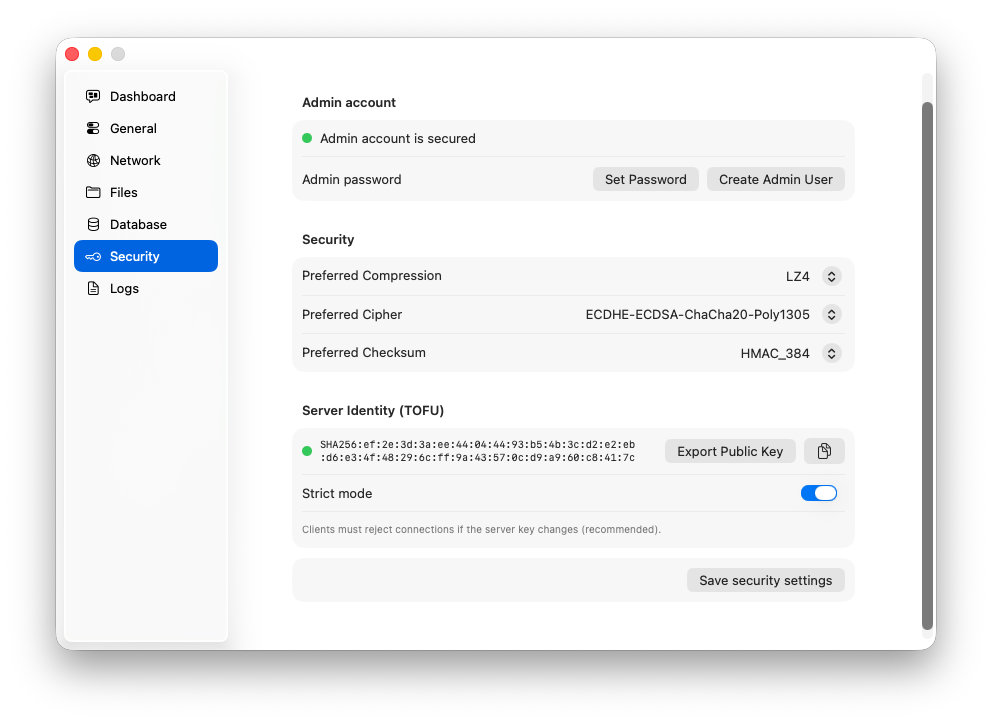
Wired 3.0 benefits from the latest encryption technologies such as Elliptic Curve Diffie-Hellman and ChaCha20-Poly1305 to protect your communications with the highest standards.
Main Features
Create, list and moderate several public chat rooms on the same server.
Direct conversations support attachments, live typing state and persistent history.
Discussion boards support threads, posts, subscriptions, reactions and server-side search.
Messages can be delivered and retrieved later when recipients come back online.
Browse remote shares, transfer files, preview content and manage directories.
Indexed search supports modern SQLite FTS5 builds, with fallback when unavailable.
Dedicated sync support keeps local folders aligned with remote Wired shares.
Users, groups, privileges and banlists can be managed through the protocol.
Servers expose event history, live event subscriptions and operational logs.
Encrypted connections, persistent server identity and login protection are built in.